Three Eliminations, 10 Faults and a Clear Training Plan: Rio at Agility Nuts
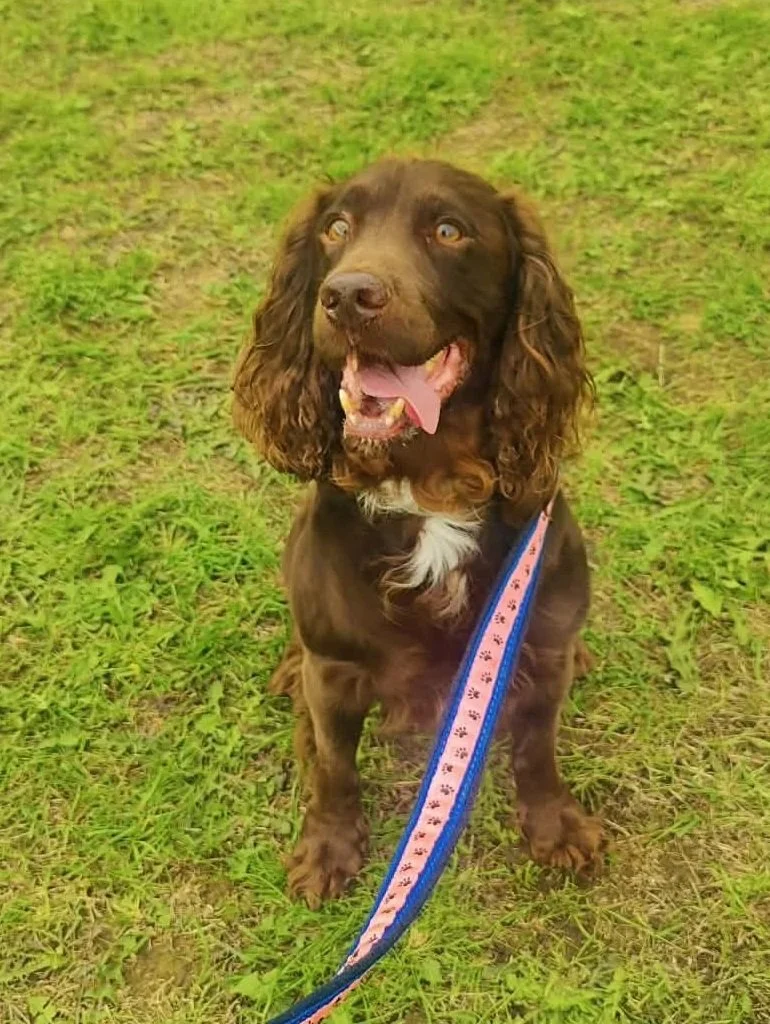
Rio and I completed four rounds at Agility Nuts on 4 September 2026. We finished with three eliminations and one round with 10 faults.
It wasn’t the day we wanted, but competition results are information, and today gave me a clear picture of what needs more work.
Two weaknesses appeared in our runs:
Threadle wraps using Rio’s verbal cue, “dig”
Independent weave-pole entries
I could also have made a smarter handling choice in one of our rounds. That matters because analysing a performance means evaluating both sides of the partnership, not automatically treating every mistake as the dog’s training problem.
Looking Beyond the Results
Three eliminations and a 10-fault round do not look impressive on paper, but the result sheet never tells the complete story.
After each run, I want to understand:
Which skill broke down?
What picture did Rio see?
Did he understand the verbal cue?
Did my movement support or contradict that cue?
Was my chosen handling option appropriate for our strengths?
Did the skill remain reliable under competition pressure?
That distinction is important. A genuine gap in Rio’s understanding requires more training, while a poor handling choice requires me to plan and execute the course differently.
Sometimes both contribute to the same mistake.
Threadle Wraps and Rio’s “Dig” Cue
“Dig” is Rio’s verbal cue for a threadle wrap.
It asks him to take the jump from the back side and wrap back towards me. To perform it successfully, Rio must listen while moving at speed, understand the verbal cue and combine it with the information provided by my position and movement.
The cue has worked before, but today showed that it is not sufficiently proofed across every competition picture.
Our training now needs to include “dig” with:
Different approach angles
Greater speed before the wrap
Tempting obstacles behind the jump
Increased distance between Rio and me
Different handler positions
Varied sequences before and after the wrap
Checks that my movement supports the verbal cue
Pulling Rio off more obvious forward lines
The aim is for Rio to understand what “dig” means regardless of how the exercise looks, not simply recognise the familiar versions we have already trained.
Building More Independent Weave Entries
Weave entries were another recurring weakness.
Rio must be able to identify and commit to the correct entry while approaching from different angles and at speed. He also needs to remain confident when I am moving, changing sides or unable to accompany him closely to the first pole.
If an entry only works from a comfortable approach with me nearby, it is not independent enough for the demands of Grade 7 courses.
Our weave-entry proofing will now include:
A wider variety of entry angles
Greater speed into the poles
Me running away from him
Handler movement beyond the entry
Rear-cross approaches
Difficult preceding obstacles
Tempting alternative lines and nearby obstacles
Reinforcement for committing independently
Flick away and layering the weaves
I will also review my handling into the poles. Proofing does not mean assuming every missed entry belongs entirely to Rio. My timing, movement and position still influence the line he takes.
I Could Have Handled One Run More Smartly
One of today’s rounds also highlighted a handling decision I could have made differently.
Course walking is not about selecting the most impressive or technically complicated handling option. It is about choosing the clearest and most efficient route for the individual team.
A theoretically valid handling choice may still be wrong for Rio and me if it creates unnecessary pressure, relies on a skill that is not currently secure or makes my information harder to deliver on time.
That gives me another useful lesson from today: assess the options more critically and choose the plan that gives Rio the clearest possible information. If I had chosen to do a blind then backside which was absolutely achievable, rather than a threadle wrap. we could have won that class. And yes, I’m kicking myself for the decision that only occurred to me after the run!
Handling smarter does not always mean doing more. Often, it means removing unnecessary risk.
Now the good bits!
We can’t just talk about the shoulda, woulda, coulda’s. We also have to acknowledge what went well.
The results do not show everything that happened on the course. There were also several parts of today’s runs that felt genuinely strong.
We successfully executed some brilliant blind crosses. I was able to move confidently, get ahead of Rio and be in position early enough to give him clear information about the next line.
That feeling of being in front of him was particularly positive. Rio is fast, so arriving where I need to be requires commitment, efficient movement and trust that he will complete the obstacle behind me. Today showed that my ability to match his speed and move proactively is improving.
I also deliberately used short lead-outs at the start line. That gave me a practical balance: enough position for me to begin the course effectively without placing unnecessary pressure on Rio’s start-line wait.
Although the completed rounds resulted in faults and eliminations, these elements were real successes:
Confident blind crosses
Getting ahead and into position
Trusting Rio’s obstacle commitment
More proactive handling
Shorter, successful start-line waits
A useful competition analysis must record what worked as well as what failed. The weaker skills shape our next training plan, but the successful moments show which parts of our partnership are becoming stronger.
Proofing Without Setting the Dog Up to Fail
The next step is not to make every training exercise extremely difficult and repeatedly test Rio until he gets it wrong.
Effective proofing should be progressive. I can change one variable at a time, reward successful choices and gradually develop his understanding.
When an error occurs, I need to consider whether to:
Simplify the exercise.
Clarify the cue.
Adjust my handling.
Reward the correct response.
Rebuild the difficulty gradually.
That creates learning rather than guessing.
Turning Today Into a Training Plan
Today has given our next training block a clear direction:
Strengthen Rio’s understanding of the “dig” cue.
Proof threadle wraps against more tempting lines.
Develop greater independence on weave entries.
Review how my movement supports each verbal cue.
Make smarter course-handling choices.
Introduce competition-style pressure progressively.
Naturally, I would have preferred four clear rounds. I compete because I want to perform well, and I am not going to pretend that three eliminations felt wonderful.
However, hiding difficult days would create a false picture of agility training. Even experienced Grade 7 and Championship teams encounter weaknesses, make handling errors and return to foundation skills.
The important part is recognising what happened and knowing what to do next.
Three eliminations, one round with 10 faults, and a much clearer training plan than we had at the beginning of the day.
The work continues.
Develop More Reliable Agility Skills
At Unleashed Pawtential, I help agility teams identify why skills break down and create a progressive plan for improving them.
Whether you need help with weave entries, threadle wraps, handling choices, obstacle independence or competition preparation, coaching can be tailored to you and your dog.
