Rio’s Competition Diary: Two Second Places at Lincoln Agility Enthusiasts
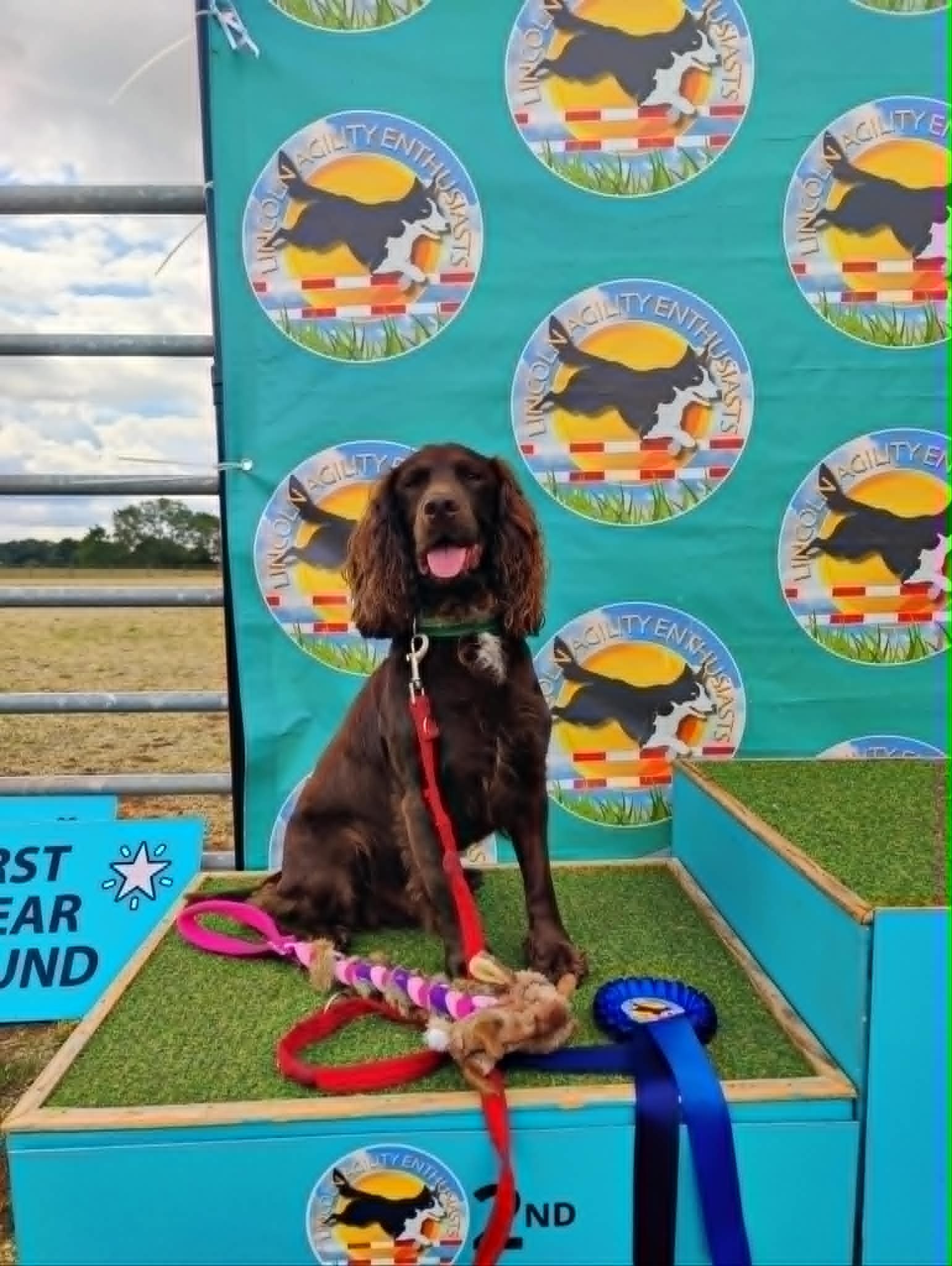
Rio secured two second places in the jumping rounds at Lincoln Agility Enthusiasts’ show on 22 August 2026.
At eight years old and competing at Grade 7, Rio continues to show how much enthusiasm he still has for agility. He is an incredibly fast, independent working cocker spaniel, and when everything comes together, he is an absolute joy to run.
Two Fast, Clear Jumping Rounds
Rio produced two successful jumping rounds during the show, finishing in second place on both occasions.
Jumping classes test a team’s ability to negotiate a course containing jumps, tunnels and weave poles without the contact equipment found in agility classes. Success depends on much more than speed: the dog needs to read each handling cue accurately while the handler must provide information early enough to keep the dog on the correct line.
With a dog as quick and independent as Rio, every movement matters. My timing, position and commitment to each line must be clear—hesitation or late information can quickly change where he believes the course is going.
Two second places in one day showed that we were able to combine his natural speed with the clarity needed to produce competitive results.
Why These Results Matter
Placings are always lovely, but they are not the only measure of a successful competition.
Each run gives me information about our training. I look beyond the final result and consider:
Whether Rio remained connected from the start line to the finish
How confidently he committed to obstacles
Whether my handling cues were clear and timely
Where I gained or lost time
Whether our current training is transferring into competition
Which details should become priorities in our next sessions
This is the same analytical approach I use when coaching my students. A clear round can still reveal opportunities for improvement, while an elimination can contain sections of excellent work.
The aim is not simply to collect rosettes. It is to understand what produced the performance and use that information to make the next one even stronger.
Training the Team in Front of You
Rio has taught me an enormous amount throughout our agility career.
His speed and independence are strengths, but those qualities also require me to be decisive. My job is not to control every stride; it is to give him clear information and trust him to complete his part of the job.
That balance between independence and connection is something we continue to develop, even at Grade 7. Advanced dogs do not stop needing foundation training, and experienced handlers never reach a point where timing, communication and course analysis no longer matter.
Our results at Lincoln were a brilliant reminder of what this partnership can produce when those pieces come together.
What Comes Next?
We will continue building on the strengths shown in these rounds while using the runs to identify the smaller details that could improve our future performances.
That is one of the things I love about agility: there is always another skill to refine, another handling choice to explore and another opportunity to become a better team.
Two jumping rounds. Two second places. One very clever spaniel.
Well done, Rio.
Develop Your Own Agility Partnership
At Unleashed Pawtential, I coach agility teams at every level—from complete beginners learning their first foundation skills to experienced competitors looking to improve their performance.
Training is practical, progressive and tailored to the individual dog-and-handler partnership.
