What Age Can a Dog Start Agility Training?
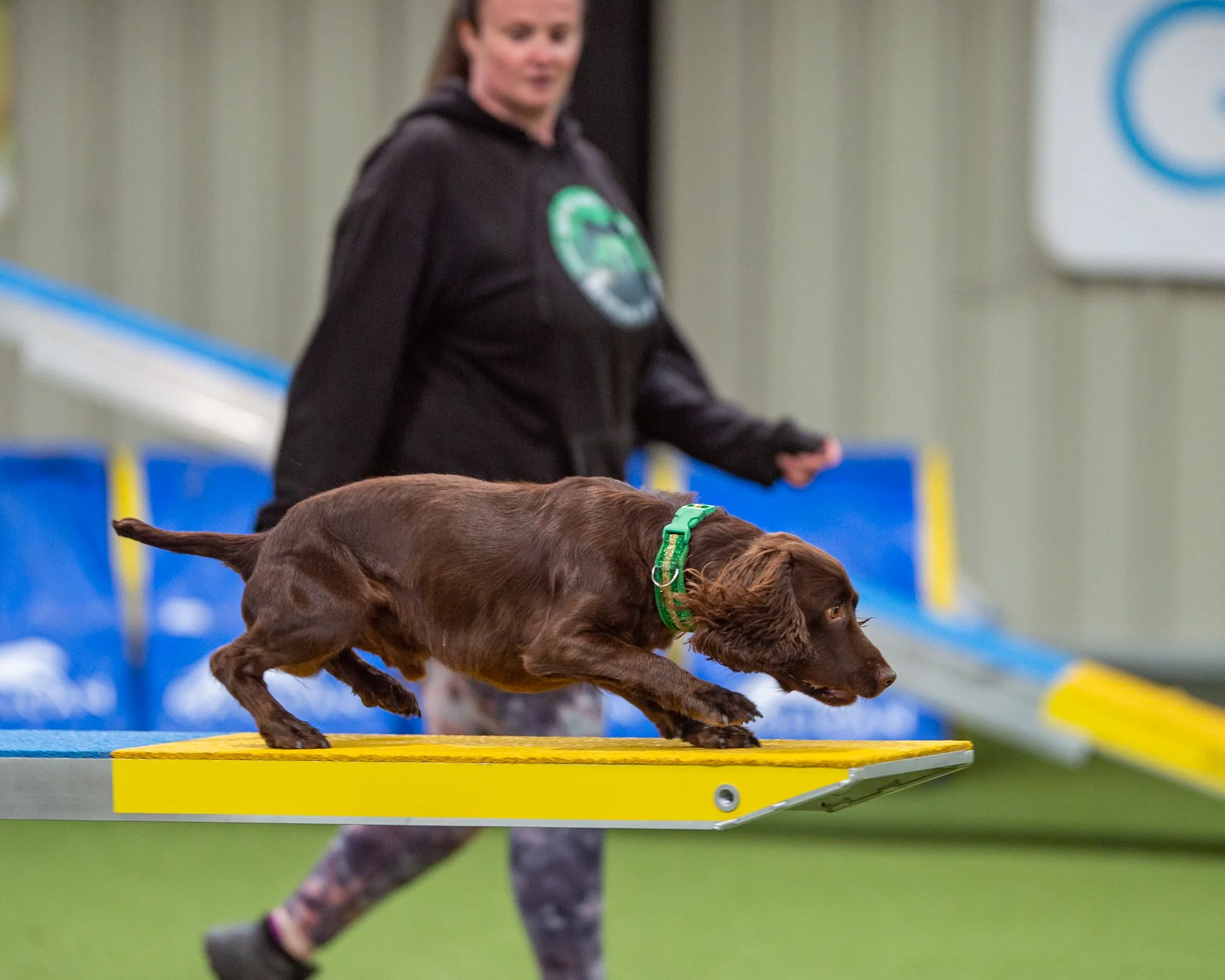
Dogs can begin age-appropriate agility foundation training from around six months old—but starting agility does not mean sending a young dog over full-height jumps or demanding equipment.
At Unleashed Pawtential in Thorner, Leeds, young dogs begin by developing the focus, confidence, body awareness and handling skills they will eventually need on an agility course. Exercises are carefully adapted to suit their age and physical development.
Proper jumping technique is introduced from approximately 12 months old, with jump heights increased gradually as the dog matures.
Can a Six-Month-Old Puppy Start Agility?
Yes. Puppies from six months old can join our Agility Foundations Course, provided they are fully vaccinated and physically well.
At this age, training is focused on developing useful skills rather than completing full agility courses. This gives young dogs an opportunity to learn in an age-appropriate way while preparing them for equipment work later.
Foundation training may include:
Focus and engagement around distractions
Following the handler’s movement
Flatwork and introductory handling skills
Building confidence in tunnels
Body-awareness exercises
Working over poles set at a very low height
Learning to play and take rewards during training
Developing independence and confidence
These exercises might not look as dramatic as a full agility course, but they are an important part of producing a confident and capable agility dog.
Why Should Puppies Begin with Foundations?
Agility requires much more than speed and jumping ability.
A dog must learn to respond to their handler, understand movement cues, stay engaged around distractions and approach new challenges confidently. Without these foundations, introducing equipment too quickly can create confusion and make later training more difficult.
Beginning with foundations allows us to develop the skills gradually. Your puppy learns how to work with you before being expected to negotiate more physically demanding obstacles.
This period also gives you time to improve your own handling and reward timing. Agility is a partnership, so both the dog and handler are learning from the beginning.
When Can Dogs Begin Proper Jumping?
Proper jumping technique is introduced from around 12 months old.
Dogs are not immediately expected to jump at their eventual competition height. The height is increased gradually as the individual dog develops the strength, coordination, confidence and technical understanding required.
The correct progression will depend on the dog in front of us. Breed, size, physical development, confidence and previous training can all affect how quickly a dog is ready to progress.
The Royal Kennel Club also recommends that dogs do not begin training on agility equipment until they are at least one year old. This is why training for younger dogs should concentrate on suitable foundations rather than repetitive or full-height jumping.
What About Weaves and Contact Equipment?
Weave poles and contact obstacles require additional physical and technical skills. They should be introduced thoughtfully rather than rushed simply because a dog has reached a particular birthday.
Exercises are selected according to the dog’s age, physical readiness and current level of training. The priority is always to develop confidence and understanding while avoiding unnecessary physical demands.
There is no benefit in rushing a young dog through every obstacle. Strong foundations make it much easier to teach equipment correctly when the dog is ready.
Is My Puppy Ready to Start?
Your puppy does not need perfect obedience or amazing focus before beginning an agility foundations course. Those are skills we will help you develop.
They should be:
At least six months old
Fully vaccinated
Physically well
Comfortable enough to train around people and other dogs
Motivated by food, toys or interaction with you
It is completely normal for a young dog to become distracted, excited or overwhelmed occasionally. Your puppy is not expected to arrive knowing how to behave like an experienced agility dog.
If your dog has a previous injury, mobility concern or health condition, please seek advice from your vet or veterinary physiotherapist before beginning training.
Is It Better to Wait Until My Dog Is Older?
You should wait before introducing physically demanding agility exercises, but you do not need to postpone all training until your dog is old enough to jump.
Beginning with age-appropriate foundations can give you and your puppy valuable time to build:
A strong working relationship
Confidence in new environments
Focus around distractions
Clear communication
Useful handling skills
Safe movement and body awareness
When your dog is ready to progress, these skills provide a much stronger starting point than introducing equipment without preparation.
Start Building Your Puppy’s Agility Foundations
Unleashed Pawtential’s six-week Agility Foundations Course is suitable for fully vaccinated dogs from six months old.
Classes take place in Thorner, Leeds, and introduce agility through progressive, age-appropriate exercises. You and your dog will begin developing the focus, confidence and teamwork needed for future agility training.
