How to Start Dog Agility: A Beginner’s Guide
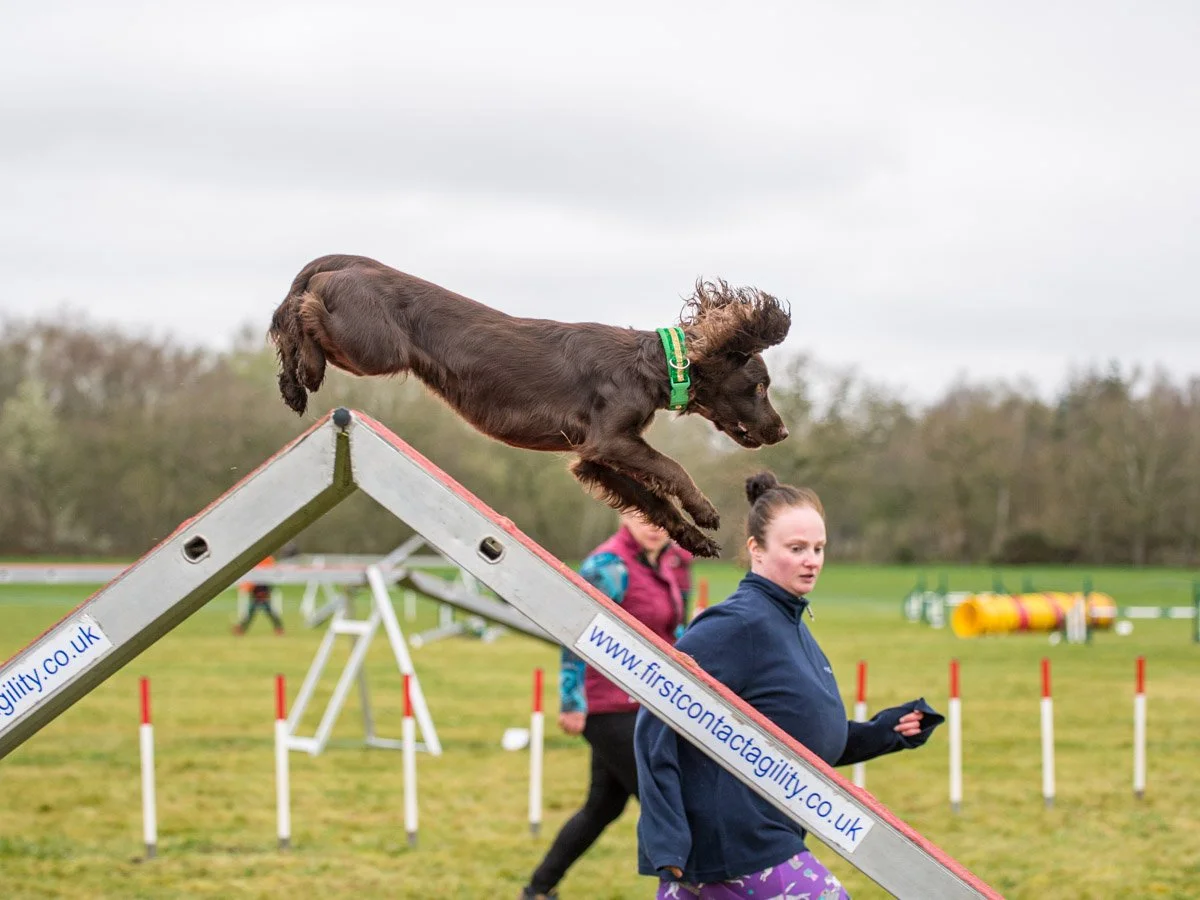
Dog agility can look complicated when you first watch an experienced team completing a course. The dog appears to know exactly where to go while the handler uses a mixture of movement, positioning and verbal cues to guide them.
However, every agility team begins in the same place: learning the foundations.
Your dog does not need any previous agility experience to start training. You do not need to understand handling techniques, own agility equipment or have ambitions to compete. Beginner training is designed to teach both you and your dog everything you need to know.
At Unleashed Pawtential in Thorner, Leeds, dogs can begin age-appropriate agility foundation training from six months old.
What Is Dog Agility?
Dog agility is an activity in which a handler guides their dog around a course containing obstacles such as jumps, tunnels, weave poles and contact equipment.
It requires teamwork rather than simply teaching a dog to run over equipment. The handler must learn how to communicate where the dog should go, while the dog develops the confidence and skills needed to complete each obstacle.
Agility can be enjoyed recreationally or pursued as a competitive sport. You do not need to decide how far you want to take it before attending your first lesson.
Does My Dog Need Basic Obedience?
It is easier to begin agility if your dog has some basic obedience and a reasonably reliable recall.
During agility training, dogs eventually work without a lead. Being able to recall your dog and regain their attention helps to keep training safe and productive.
However, your dog does not need perfect obedience before starting. Focus, engagement and responding around distractions are all skills that can be developed during training.
If your dog currently finds it very difficult to focus or return when called, a one-to-one lesson may be the best starting point. This allows us to work at an appropriate level without the additional distractions of a group class.
Can an Excitable, Nervous or Reactive Dog Start Agility?
Potentially, yes—but they should attend a one-to-one assessment before joining a class.
A private lesson gives us an opportunity to understand your dog’s behaviour, see how they respond to the training environment and determine what support they require.
Some dogs benefit from developing focus, confidence or calmness individually before working near other dogs. Beginning with a one-to-one does not mean your dog has failed or will never be suitable for a class. It simply provides a more manageable and productive introduction.
What Age Can a Dog Start Agility?
Dogs can begin suitable foundation training from six months old, provided they are fully vaccinated and physically well.
Young dogs are not expected to complete full courses or jump at competition height. Their early training focuses on age-appropriate skills such as:
Focus and engagement
Flatwork and introductory handling
Body awareness
Confidence in tunnels
Following the handler’s movement
Working over poles at a very low height
Playing and taking rewards in a training environment
Proper jumping technique is introduced from around 12 months old. Jump heights are then increased gradually as the dog develops.
Older dogs may also be able to begin agility if they are physically fit. Exercises can be adapted using lower jump heights, shorter sequences and limited weave or contact work. Dogs with mobility problems or previous injuries may require approval from a vet or veterinary physiotherapist before participating.
Do I Need to Buy Agility Equipment?
No. You do not need to buy any agility equipment before beginning lessons.
It can be tempting to purchase jumps or weave poles and begin practising at home, but incorrect equipment setup or rushed training can create habits that later need to be retrained.
Begin with professional instruction so that you understand which exercises are appropriate for your dog and how to practise them correctly.
Many useful foundation exercises can be practised at home without specialist equipment. Focus, reward skills, handler engagement and following movement will all support your future agility training.
Should I Choose a Class or a One-to-One Lesson?
Both options can be suitable for beginners.
Beginner agility classes
Classes provide a structured progression and allow your dog to learn in the presence of other dogs and handlers. They are suitable for dogs that can remain comfortable and reasonably focused in a group environment.
At Unleashed Pawtential, our six-week Agility Foundations Course introduces complete beginners to the essential skills required for future agility training.
One-to-one agility coaching
Private coaching is tailored entirely to you and your dog. It may be the better option if your dog:
Is nervous or easily overwhelmed
Is reactive around other dogs
Becomes extremely excited in a class environment
Struggles significantly with focus or recall
Requires exercises to be physically adapted
Learns more effectively without group distractions
One-to-one coaching is also available to handlers who simply prefer individual tuition.
What Should I Bring to an Agility Lesson?
Bring:
Plenty of small, high-value treats
Your dog’s favourite toy
A long line
Water for your dog
Comfortable clothing
Suitable footwear for training outdoors
Choose rewards your dog genuinely enjoys. Agility training takes place in an exciting environment, so your usual everyday treats may not be rewarding enough to compete with the surrounding distractions.
Your instructor will explain when the long line should be used and safely removed or managed around equipment.
What Will My Dog Learn First?
Beginner agility training starts with foundations rather than immediately attempting an entire course.
Early lessons may include:
Building focus around distractions
Developing confidence and motivation
Learning to follow handling cues
Introducing simple jump and tunnel exercises
Improving body awareness
Teaching safe, thoughtful movement
Helping the handler deliver rewards effectively
Each exercise prepares your dog for more advanced skills. Taking time over the foundations produces a more confident dog and gives the handler a clearer understanding of how to guide them.
How Do We Progress?
Your first stage will usually be a beginner agility class or personalised one-to-one coaching.
As your dog develops confidence, focus and foundation skills, you can progress towards more advanced exercises and classes. Equipment is introduced gradually, and handling becomes more technical as you learn to complete longer sequences.
For teams interested in competition, training can eventually progress to course skills, independent obstacle performance, handling choices, speed and accuracy.
There is no requirement to compete. Your progression can be shaped around what you and your dog enjoy and what you would like to achieve together.
Start Dog Agility in Leeds
Unleashed Pawtential provides progressive dog agility training in Thorner, Leeds, led by Nikki Hodgson, a Grade 7 and Championship agility competitor.
Our Agility Foundations Course is suitable for complete beginners with fully vaccinated dogs from six months old. One-to-one coaching is also available for dogs and handlers who need a more personalised introduction.
View and book beginner dog agility training and begin building your skills as a team.
